
The CDTFA Credit Card Ratio Method – What California Business Owners Need to Know
INTRODUCTION: WHY THIS MATTERS FOR YOUR BUSINESS
If you’re a California business owner facing a California Department of Tax and Fee Administration (CDTFA) sales tax audit, there’s a good chance the credit card ratio method will play a major role in determining how much tax you supposedly owe.
It’s a calculation CDTFA uses when they think your books or sales records aren’t complete or reliable — and while the method is legal, it’s not always accurate. When applied without careful scrutiny, it can drastically overstate your sales and inflate your tax bill.
In this article, I’ll explain how the credit card ratio method works, why it matters in CDTFA audits, when it can be challenged, and what real-world cases (including my own client work here in Orange County) tell us about fighting back. We’ll also connect this discussion to our
CDTFA Audit Representation service page. so you can explore detailed strategies for defending your business.
WHAT IS THE CREDIT CARD RATIO METHOD?
The credit card ratio method is CDTFA’s way of estimating your total sales when they have partial records. Here’s how it works:
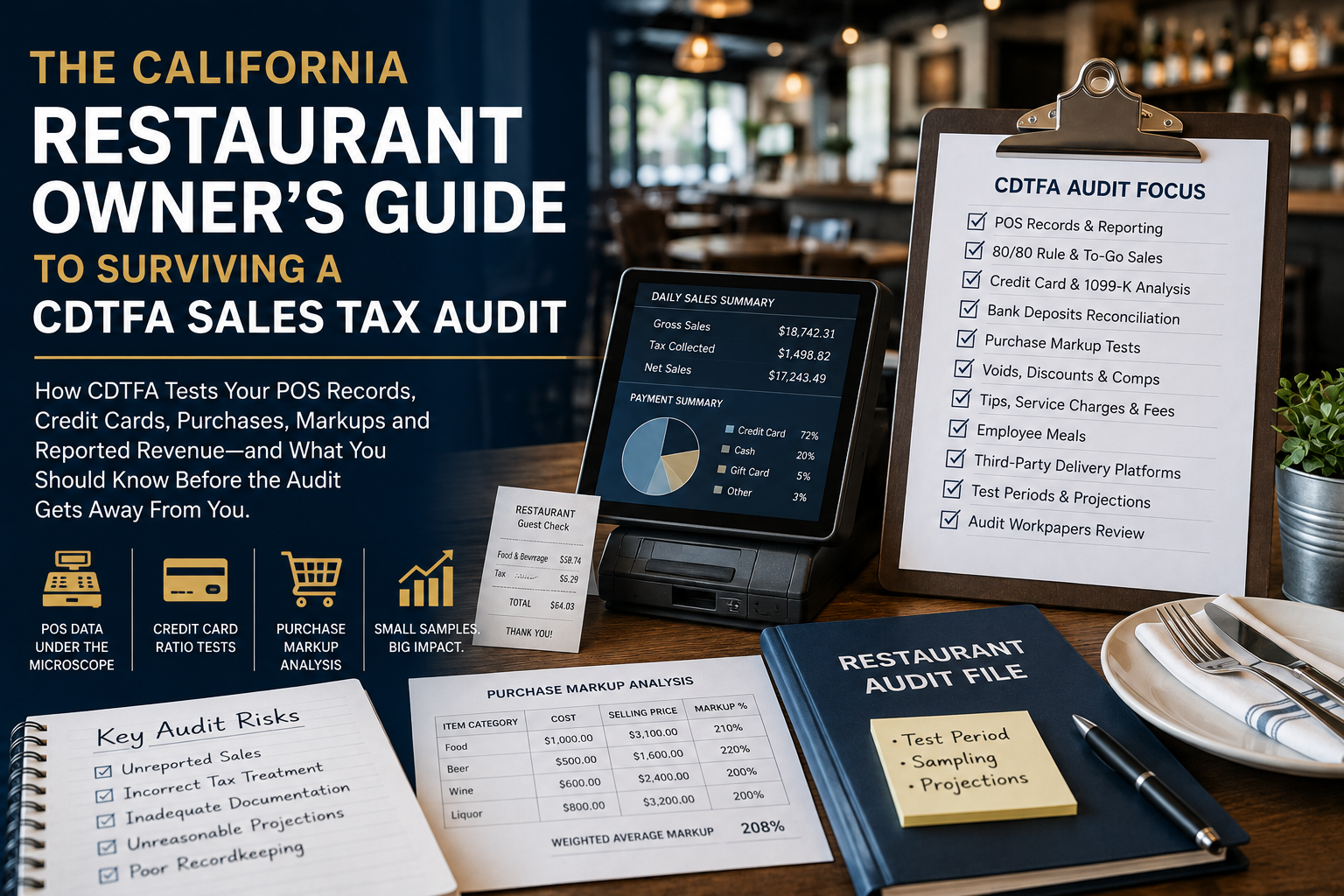
1. Determine Your Credit Card Sales – CDTFA looks at your merchant processor statements or IRS Form 1099-K totals for the audit period.
2. Estimate the Cash Sales – They apply a “credit card-to-cash ratio” based on other businesses they believe are similar to yours (called “comparator audits”).
3. Gross Up Your Sales – If the ratio says that, for example, 60% of your sales are by card, they assume the other 40% are cash sales — and they add that to your total.
WHY THE RATIO MATTERS
Every percentage point in the credit card ratio can mean thousands of dollars in additional assessed sales — and by extension, sales tax, penalties, and interest.
For example:
At 61% card usage, CDTFA assumes you have 39% cash sales to add.
At 75% card usage, they assume just 25% cash sales — significantly lowering the “grossed-up” figure.
In a recent Orange County case, we were able to move CDTFA from 61% to 70%, and are now pushing for 75–79% based on more accurate, relevant data.
HOW CDTFA CHOOSES THE RATIO
CDTFA often bases the ratio on three comparator audits of similar businesses. The problem is that “similar” is subjective:
If one comparator is geographically distant (e.g., San Bernardino compared to Costa Mesa), local demographics and payment habits can differ.
If an audit period is outdated (e.g., pre-COVID), it may not reflect the huge shift toward credit card usage in recent years.
If a comparator’s industry isn’t a perfect match, the cash/credit mix can be completely different.
Understanding this selection process is part of knowing the full California Sales Tax Audit Process.
CALIFORNIA OTA CASE GUIDANCE
Recent California Office of Tax Appeals (OTA) decisions have clarified important points:
Appeal of Kafarah (2022): The credit card ratio method is valid, but only if the data is representative. Outdated or non-comparable audits can undermine its accuracy.
Appeal of Pho Anh Binh, Inc. (2024): CDTFA increased the credit card ratio when better, more representative data became available — proving it’s negotiable.
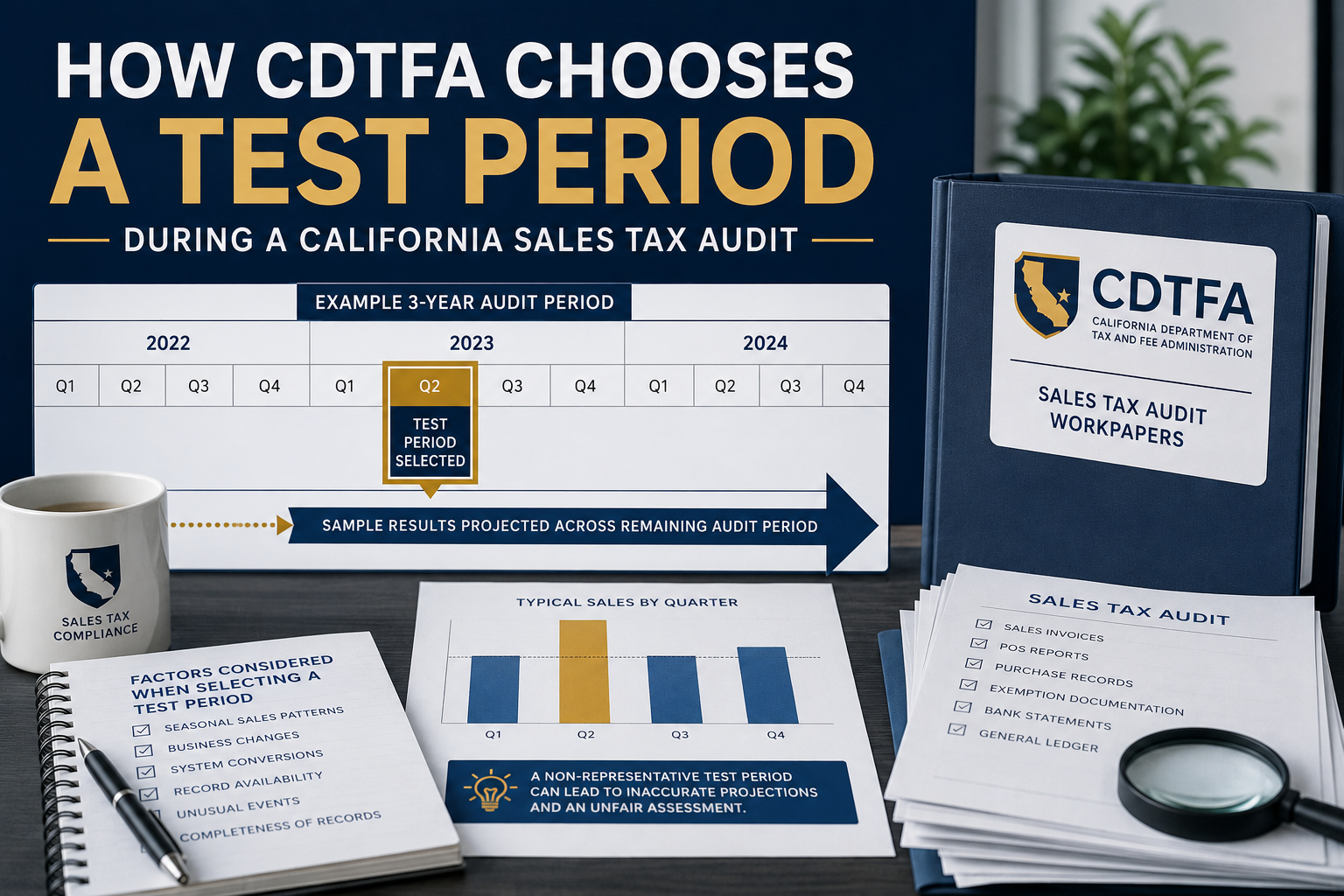
Appeal of Huang (2021): Even short test periods can work if backed by solid, documented data.
Appeal of Pitsley (2020): Once CDTFA has a minimal evidentiary basis, the burden is on the taxpayer to prove why the ratio is wrong.
WHEN AND HOW TO CHALLENGE THE RATIO
You can and should challenge the ratio if:
- CDTFA used outdated audit periods.
- Comparators are geographically distant or in a different market.
- You have reliable merchant data for the full audit period.
- Your own books (when reconciled) tell a different story.
Key to winning: Show why your data is more representative than CDTFA’s comparators. That can mean:
- POS reports (cash vs. card sales)
- Merchant processor statements
- Bank deposit analysis
- Seasonal or business model differences
In some cases, this challenge can also involve learn how to request penalty reductions if the CDTFA’s assessment was based on flawed methodology that unfairly inflated your liability.
ORANGE COUNTY EXAMPLE
One of my recent Orange County cases involved a retail store where CDTFA started with a 61% card ratio. By showing:
- Two nearby comparators with ratios of 90% and 75%, and
- The client’s own merchant data (76.2% card usage in 2022),
We persuaded CDTFA to raise the figure to 70% — reducing the taxable measure and setting up further negotiations to bring it closer to the real number.
THE BOTTOM LINE
The credit card ratio method isn’t going away. But it’s not set in stone, either. With the right analysis, you can often replace CDTFA’s generic ratio with one that’s based on your actual business reality — potentially saving you thousands.
If you’re under CDTFA audit and the credit card ratio method is being used, don’t assume their number is correct.
Call Boulanger CPA and Consulting PC at 657-218-5700 or contact us online for a confidential review of your case.
We work with Orange County business owners every day to defend against overstated CDTFA assessments and protect your bottom line.
Frequently Asked Questions: CDTFA Credit Card Ratio Method
What are California estimated tax penalties?
These penalties apply when you underpay or miss your required quarterly estimated tax payments to the Franchise Tax Board.
Who needs to pay estimated taxes in California?
Business owners, self-employed individuals, and others without sufficient tax withholding typically must make quarterly estimated payments.
How are estimated tax penalties calculated?
The FTB calculates penalties based on the amount underpaid, the time the payment was late, and the applicable interest rate.
Can penalties be reduced or waived?
Yes. If you had reasonable cause—such as illness, disaster, or unusual circumstances—you can request penalty abatement from the FTB.
What happens if I repeatedly miss estimated payments?
Chronic underpayment can lead to larger penalties, liens, and collection actions from the FTB.
How can a CPA help with estimated tax penalties?
A CPA can calculate accurate quarterly payments, help you avoid future penalties, and negotiate penalty reductions with the FTB if you qualify.

Marc Boulanger, CPA — California Sales Tax & CDTFA Audit Specialist
Marc is a CPA with many years of experience helping California business owners resolve complex sales tax and CDTFA audit matters. With formal training in accounting and a Master’s degree in Accounting, Marc combines technical precision with practical experience across industries such as restaurants, auto repair, retail, and multi-location franchises.
Outside of work, Marc enjoys traveling the country with his wife of 30 years and their five children. His approach to audit defense is built on clear communication, thorough analysis, and treating every client’s business as if it were his own.
Recent Posts