
CDTFA Markup Audits Explained – What You Need to Know
INTRODUCTION: WHY MARKUP AUDITS ARE A BIG DEAL IN CALIFORNIA
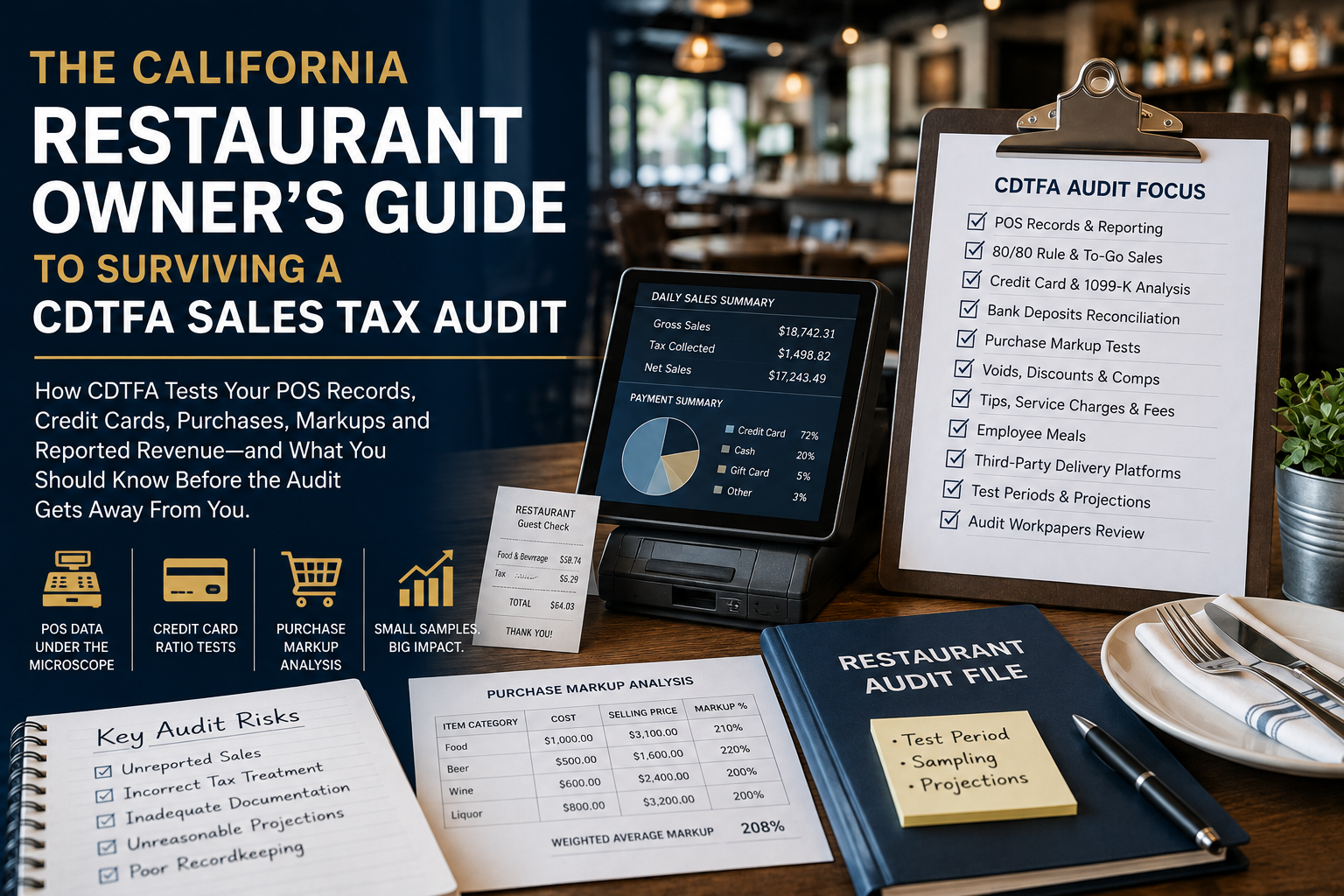
If you operate a retail, restaurant, or other sales-driven business in California, the California Department of Tax and Fee Administration (CDTFA) may someday audit your books. One of their most aggressive and misunderstood tools is the markup audit.
This method uses your cost of goods sold (COGS) and expected markup percentages to estimate sales. If your reported sales are lower than their projections, the CDTFA may allege underreporting—and assess additional tax, penalties, and interest.
In this article, we’ll break down how markup audits work, why they can be so damaging,
CDTFA Audit Manual – How They Think, and what steps you can take to fight back — including
How to Get Audit Penalties Abated with the CDTFA.
WHAT IS A CDTFA MARKUP AUDIT?
A markup audit compares the gross sales you reported to the CDTFA against what the agency thinks your sales should have been, based on purchase records and standard markup rates for your industry.
Key steps in a markup audit:
1. Determine COGS: CDTFA reviews your purchase invoices.
2. Apply Industry Markup Rates: They use internal data or audit manuals to set an “expected” markup percentage.
3. Calculate Expected Sales: COGS × markup rate = projected gross sales.
4. Compare to Reported Sales: Any shortfall is assumed to be unreported taxable sales.
WHY MARKUP AUDITS CAN BE UNFAIR
Markup audits are presumptive, meaning the CDTFA assumes its calculations are correct unless you prove otherwise.
Common problems include:
- Incorrect markup rates that don’t reflect your actual pricing.
- Failure to account for discounts, promotions, or spoilage.
- Ignoring exempt sales like wholesale transactions or non-taxable goods.
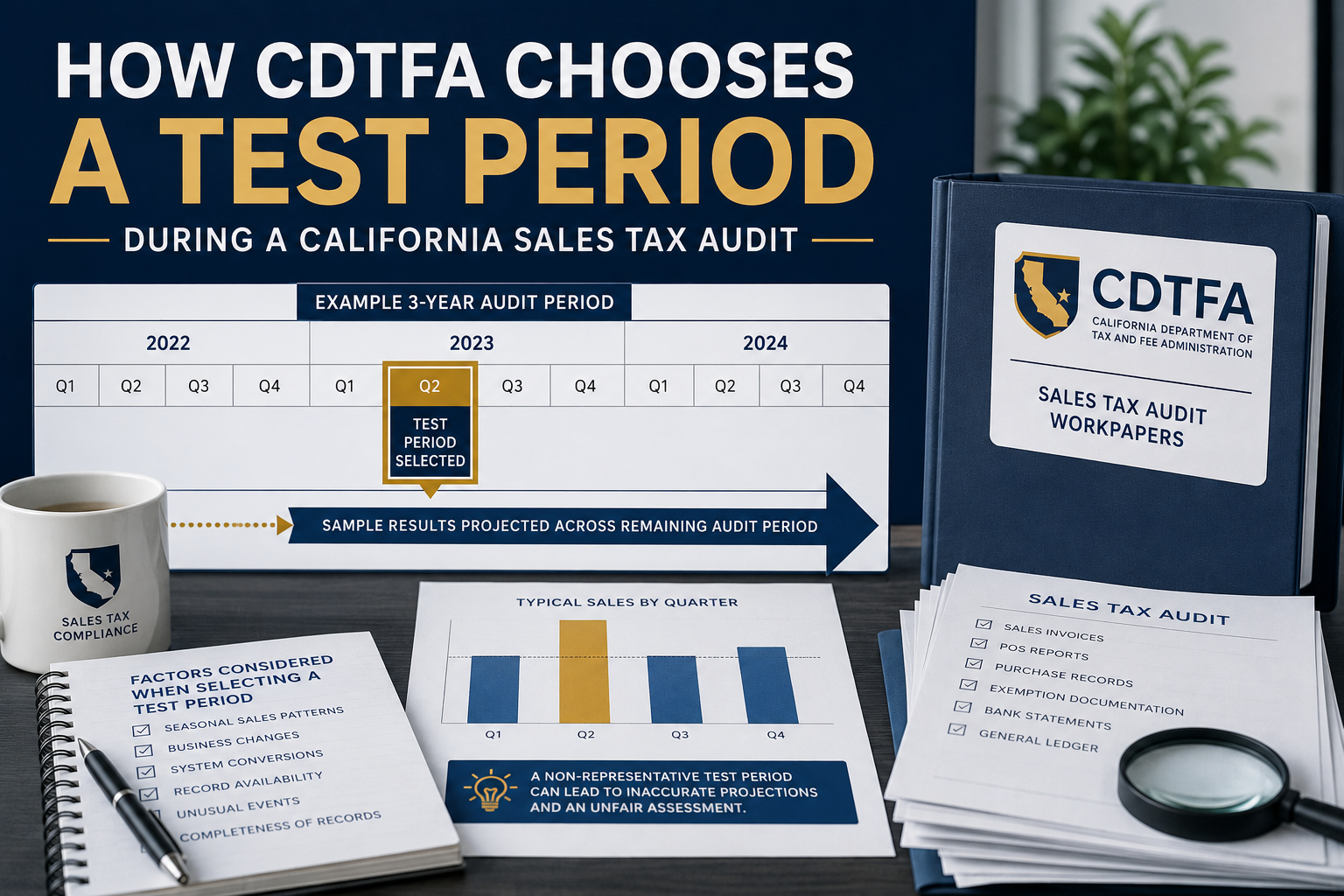
- Seasonality not being factored into the calculations.
INDUSTRIES MOST AFFECTED
- Markup audits are common in:
- Restaurants and bars
- Convenience stores
- Liquor stores
- Retail clothing
- Specialty food shops
If your business deals with high-volume, lower-dollar transactions, CDTFA is more likely to use markup audits as a shortcut instead of reconstructing every sale.
YOUR RIGHTS IN A MARKUP AUDIT
You have the right to:
- Challenge the markup rate and provide your own analysis.
- Submit detailed sales records to replace CDTFA estimates.
- Request auditor’s workpapers to understand how they calculated your “expected” sales.
- Appeal an assessment through the Office of Tax Appeals — or
How to Appeal a CDTFA Sales Tax Audit Assessment with proper representation.
STRATEGIES TO DEFEND AGAINST A MARKUP AUDIT
1. Document Actual Markup Percentages
Keep detailed sales and purchase records to show your real pricing structure.
2. Account for Discounts and Promotions
Document every sale that was reduced or given away.
3. Separate Taxable from Nontaxable Sales
Track exempt sales and maintain proper resale certificates.
4. Hire a CPA Experienced in CDTFA Audits
An Orange County-based CPA who regularly handles CDTFA audit representation can challenge flawed assumptions, prepare evidence, and negotiate lower assessments.
THE COST OF LOSING A MARKUP AUDIT
What Happens When You Fail a CDTFA Audit is rarely just a simple bill. You could face:
- Back sales tax assessments
- Interest charges (currently compounding daily)
- Penalties for negligence or fraud
- Potential criminal referrals in extreme cases
Frequently Asked Questions
What is a CDTFA markup audit?
A CDTFA markup audit estimates your sales by applying industry markup rates to your cost of goods sold, then compares the result to your reported sales.
Why are markup audits often inaccurate?
They may use incorrect markup percentages, ignore discounts or promotions, and fail to exclude exempt sales, leading to inflated tax assessments.
How can I fight a CDTFA markup audit?
Provide documentation of your actual markups, separate taxable and non-taxable sales, and challenge CDTFA assumptions with the help of an experienced CPA.
Can CDTFA audit prior years using a markup audit?
Yes. They can audit up to three years back in most cases, but longer if they suspect fraud or significant underreporting.
What happens if I lose a markup audit?
You could face a large back-tax bill, penalties, and interest. An Orange County CPA can help you appeal and potentially reduce the liability.

Marc Boulanger, CPA — California Sales Tax & CDTFA Audit Specialist
Marc is a CPA with many years of experience helping California business owners resolve complex sales tax and CDTFA audit matters. With formal training in accounting and a Master’s degree in Accounting, Marc combines technical precision with practical experience across industries such as restaurants, auto repair, retail, and multi-location franchises.
Outside of work, Marc enjoys traveling the country with his wife of 30 years and their five children. His approach to audit defense is built on clear communication, thorough analysis, and treating every client’s business as if it were his own.
Recent Posts