
How to Respond to a CDTFA Audit Letter in California

If you’ve received an audit letter from the California Department of Tax and Fee Administration (CDTFA), take a deep breath — then take action.
Sales tax audits in California move fast and can escalate quickly if you don’t respond correctly. Whether you’re a restaurant, retailer, contractor, or service business, the way you handle the first few steps can determine whether your audit is manageable… or devastating.
In this guide, we walk you through what to expect and how to respond professionally and strategically.
WHAT IS A CDTFA AUDIT LETTER?
The audit letter is your formal notice that the CDTFA is reviewing your sales tax reporting. It typically includes:
- The audit period (usually 3+ years)
- A request for records and documents
- An assigned auditor’s name and contact information
The letter may sound routine, but it’s a serious legal notification — and the clock starts ticking the day it arrives.
Many business owners ask, what triggers a CDTFA sales tax audit? Common reasons include late filings, mismatched sales reports, cash-heavy industries, or prior compliance issues. Knowing these triggers can help you prepare a stronger defense.
STEP 1: RESPOND BEFORE THE DEADLINE
Never ignore a CDTFA audit letter. You typically have 14–30 days to reply and begin the process.
- DO respond in writing, confirming receipt and willingness to cooperate
- DON’T send over all your records without reviewing them first
- DO contact a tax professional experienced in CDTFA audits
If you miss your deadline, the auditor may proceed based on estimates — or escalate the case.
STEP 2: GET CLEAR ON THE AUDIT SCOPE
Before handing anything over, clarify:
- The exact years or quarters being audited
- What industries or locations are included
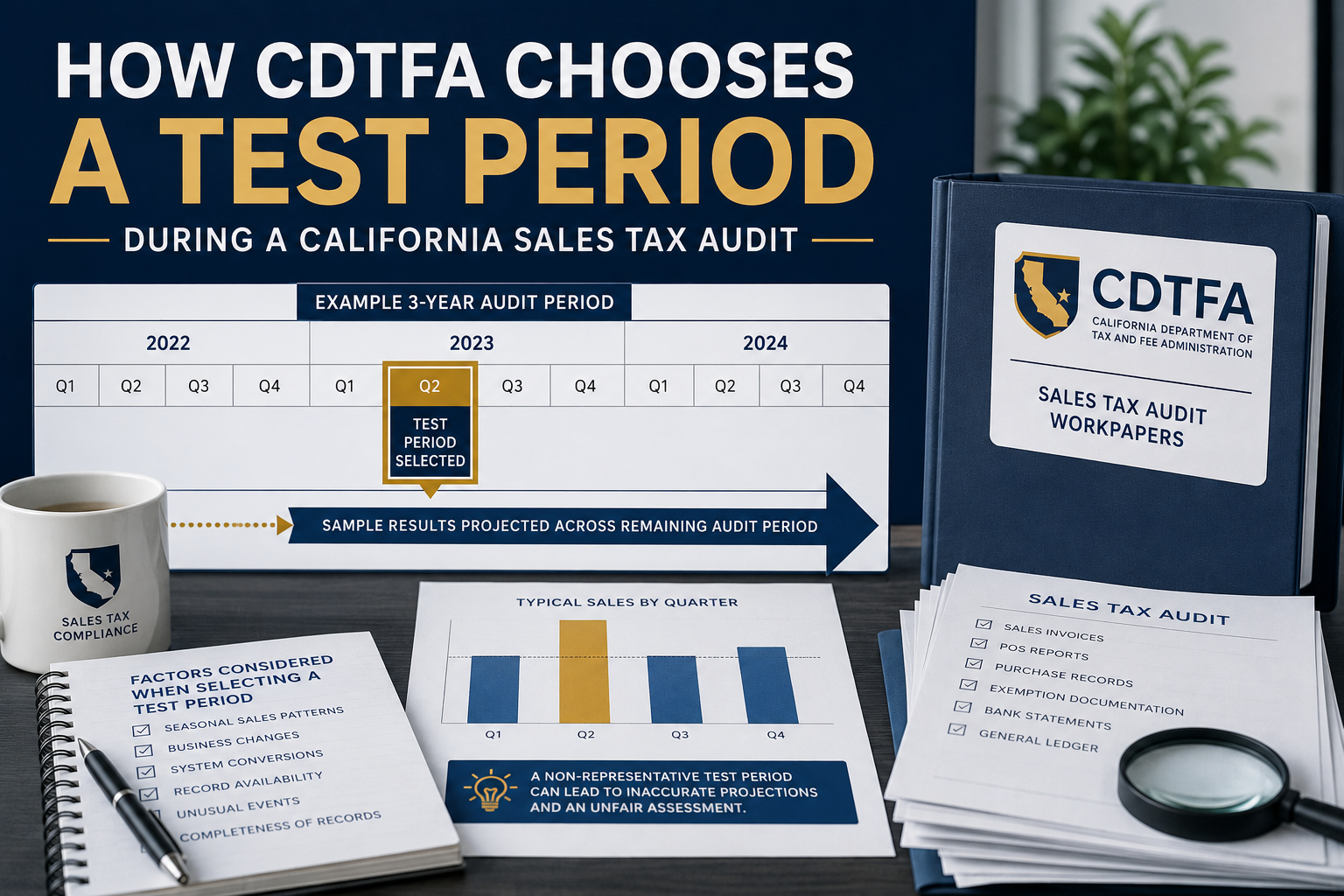
- What methods will be used to sample your data
Many assessments are inflated simply because the scope wasn’t clearly defined — or the business gave the CDTFA too much access.
STEP 3: REVIEW & PREPARE YOUR RECORDS
Start gathering:
- Sales tax returns (filed and paid)
- POS reports and Z-tapes
- Bank statements
- General ledger entries
- Purchase and resale records
Warning: CDTFA auditors may assume missing records = underreported sales. Don’t give them that opening.
At this stage, federal tax issues can surface too. If the IRS is involved, you may need help with responding to an IRS audit assessment or even challenging IRS penalties that stack on top of state liabilities.
STEP 4: DO NOT REPRESENT YOURSELF (IN MOST CASES)
Most CDTFA audits involve:
- Industry markup estimates
- Inventory/purchase reconciliations
- Interviews with your staff
- Assumptions based on limited data
If you try to “just cooperate,” you may agree to things that drastically increase your liability. A CPA or representative who understands CDTFA audits can challenge methods and defend your margins.
We also see overlapping state enforcement, such as California FTB bank levy enforcement or an EDD payroll tax levy in California, which can compound financial pressure on business owners.
STEP 5: DON’T IGNORE THE NEXT LETTERS
The audit letter is just the beginning. If you don’t take it seriously, the CDTFA may:
- Assess penalties + interest
- File a tax lien on your business
- Move to levy bank accounts or suspend your permit
This is when many taxpayers also search for IRS tax relief near you to get both state and federal agencies under control with professional help.
Responding early and strategically is your best defense.
Read more: What Triggers a CDTFA Sales Audit in California
GET HELP BEFORE YOU HAND ANYTHING OVER
At Boulanger CPA and Consulting PC, we help California business owners respond to CDTFA audits — and protect their livelihoods from aggressive assessments.
If you want to prepare properly and avoid unnecessary liability, learn more in Defend What’s Yours — our resource for protecting businesses against government overreach.
Frequently Asked Questions
Why did I get a CDTFA audit letter?
The California Department of Tax and Fee Administration (CDTFA) sends audit letters when it wants to review sales tax reporting. This may be triggered by discrepancies, industry averages, or random selection.
What should I do first after receiving an audit letter?
Do not ignore it. Review the letter carefully, gather requested records, and consider consulting a tax professional before responding to ensure accuracy.
What records will the CDTFA request?
Common requests include sales journals, purchase invoices, bank statements, and point-of-sale records. Organized documentation is key to minimizing adjustments.
Can I request more time to respond?
Yes. If you need more time to gather records, you can request an extension from the auditor. It’s best to ask early to avoid penalties for late responses.
What happens if I ignore the CDTFA audit letter?
If you fail to respond, the CDTFA may estimate your sales based on industry data or other records. These estimates often result in higher assessments.
Can I dispute CDTFA audit findings?
Yes. If you disagree with the auditor’s conclusions, you can provide additional documentation or file an appeal to challenge the results.
How long does a CDTFA audit take?
The length varies depending on the complexity of your records and business. Most audits cover three years of activity and take several months to complete.
Should I hire a professional before responding?
Yes. A professional ensures your records are presented correctly, prevents unnecessary disclosures, and helps negotiate with auditors to protect your business.

Marc Boulanger, CPA — California Sales Tax & CDTFA Audit Specialist
Marc is a CPA with many years of experience helping California business owners resolve complex sales tax and CDTFA audit matters. With formal training in accounting and a Master’s degree in Accounting, Marc combines technical precision with practical experience across industries such as restaurants, auto repair, retail, and multi-location franchises.
Outside of work, Marc enjoys traveling the country with his wife of 30 years and their five children. His approach to audit defense is built on clear communication, thorough analysis, and treating every client’s business as if it were his own.
Recent Posts