
How CDTFA Sales Tax Assessments Are Calculated – A Guide for California Business Owners
If you’re a California business owner, receiving a notice from the California Department of Tax and Fee Administration (CDTFA) can feel like a punch to the gut. Sales tax audits are stressful enough, but when the CDTFA issues a sales tax assessment, the stakes are even higher. These assessments can add up to tens of thousands of dollars in back taxes, interest, and CDTFA penalties that can quickly spiral out of control.
The problem? Many business owners don’t understand how CDTFA actually calculates these assessments. Without that knowledge, it’s almost impossible to know if the state’s numbers are correct — or inflated.
In this post, we’ll break down how CDTFA sales tax assessments are calculated, what methods auditors use, why assessments often overstate liability, and how you can fight back with effective California sales tax audit defense strategies.
WHAT IS A CDTFA SALES TAX ASSESSMENT?
A sales tax assessment is the CDTFA’s official calculation of how much sales tax it believes your business owes. It’s the end result of an audit or review, and it becomes legally enforceable once issued.
- If you don’t respond or appeal, the CDTFA can use this assessment to:
- File a lien against your business or personal assets
- Seize bank accounts or receivables
- Levy property or garnish wages
- Refer your case to collections or the Attorney General
In other words, the assessment is the CDTFA’s way of turning assumptions into debt. Business owners who don’t fight back are often left failing a CDTFA audit without ever realizing they had options.
THE CORE METHODS CDTFA USES TO CALCULATE ASSESSMENTS
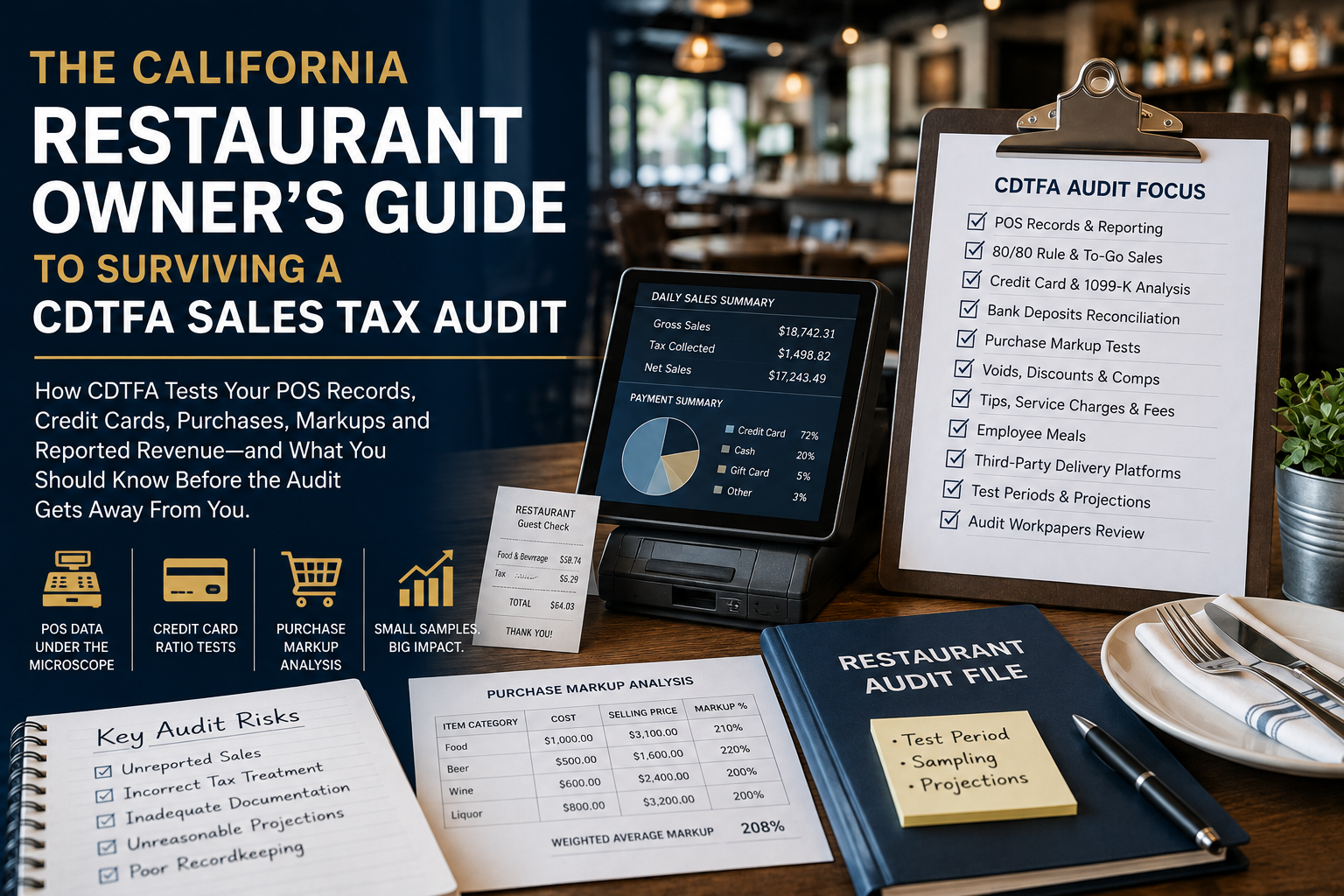
CDTFA auditors rely on several different methods to estimate taxable sales. The method they choose depends on your industry, the records you provide, and whether they suspect underreporting.
Here are the most common:
1. Markup Method
CDTFA reviews your purchase invoices and applies an average markup percentage to estimate sales.
Example: If your liquor store buys a case of beer for $20 and auditors apply a 40% markup, they’ll assume you sold it for $28 — whether that reflects reality or not.
Often based on industry averages, not your actual pricing.
👉 Related post:
CDTFA markup audits
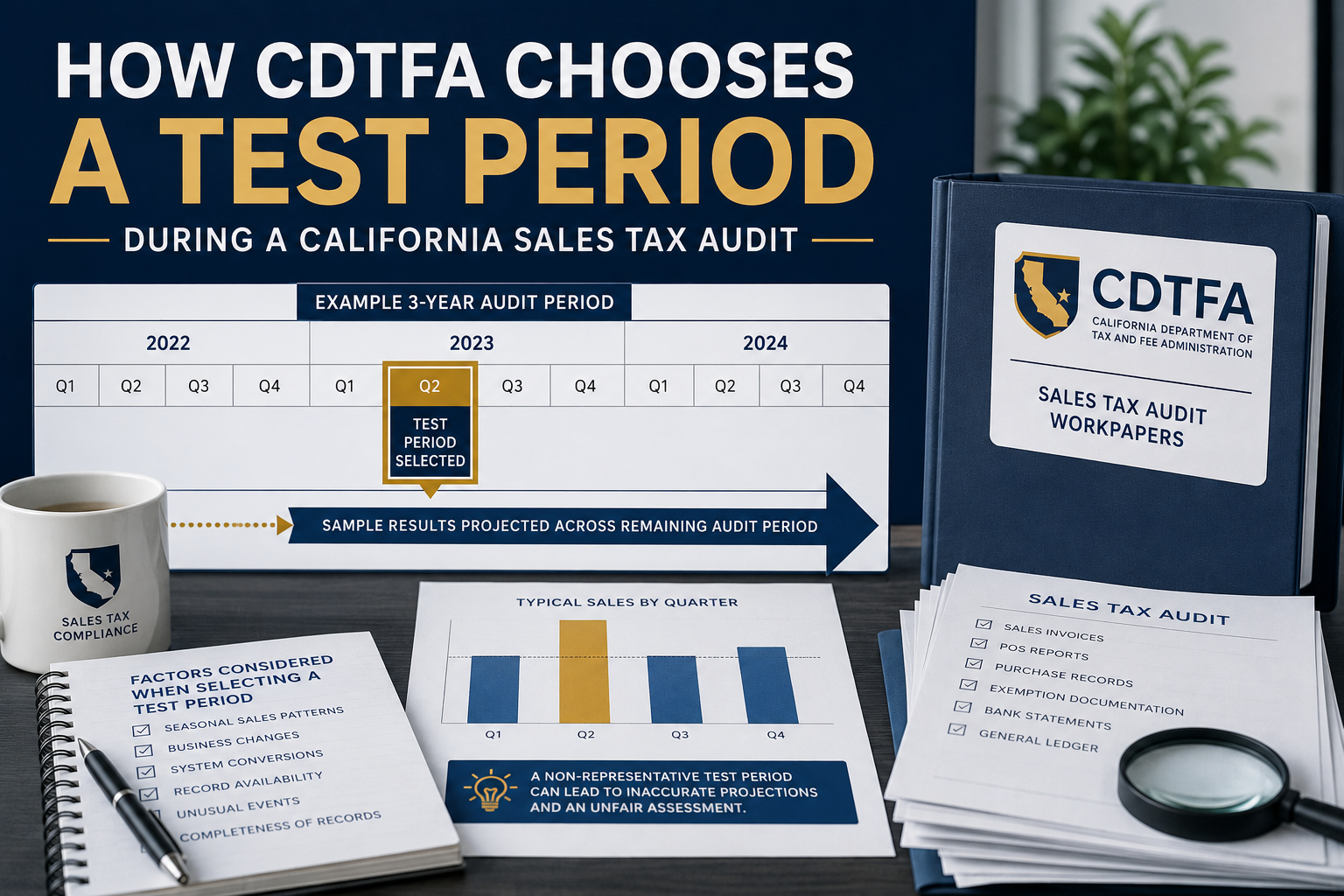
2. Observation and Test Period Method
Auditors may observe your business for a short period (a week or month) and then project that data across multiple years.
Example: A restaurant is observed to sell $25,000 worth of food in July. CDTFA extrapolates that the restaurant sells $300,000 per year.
Highly risky if the test period was unusually busy (e.g., summer tourist season).
3. Bank Deposit Method
CDTFA reviews deposits into your business accounts and assumes they are gross sales.
Adjustments may or may not be made for non-sales deposits (like loans or transfers).
This often overstates taxable sales unless carefully reconciled.
4. Third-Party Data Method
Auditors use data from suppliers, wholesalers, or credit card companies to estimate your sales.
Example: If your supplier reports $500,000 in product sales to you, CDTFA assumes all were resold and taxable.
Dangerous if you offer exempt products, promotions, or waste/loss.
5. Sampling & Projection
CDTFA takes a sample of your records (e.g., three months) and projects results over the entire audit period.
Common when your records are incomplete.
Even small errors in the sample period can magnify into six-figure assessments.
WHY CDTFA ASSESSMENTS ARE OFTEN INFLATED
Many California businesses discover that their CDTFA assessment is much higher than what they believe they owe. Common reasons include:
Use of industry averages instead of your actual data
Failure to account for exempt sales (e.g., groceries, resale items)
Ignoring waste, spoilage, or theft
Overcounting based on bank deposits
Projecting from a busy season to the entire year
Applying penalties of up to 25% for “negligence”
This is why blindly accepting an assessment is dangerous. Unless you challenge the CDTFA’s assumptions, their inflated numbers become law.
HOW TO CHALLENGE A CDTFA ASSESSMENT
1. Request Detailed Workpapers – You have the right to see exactly how the auditor calculated the assessment.
2. Provide Accurate Records – Invoices, inventory reconciliations, and exemption certificates can help overturn CDTFA assumptions.
3. File a Timely Petition – You usually have 30 days from the Notice of Determination to appeal.
4. Use the Taxpayer Rights Advocate – For cases of unfair treatment or unreasonable assessments.
5. Hire a Professional – An experienced CPA can reconstruct records, negotiate adjustments, and appeal errors.
👉 Related post: CDTFA audit appeal
THE ROLE OF BOULANGER CPA IN CDTFA DEFENSE
At Boulanger CPA and Consulting PC, we represent businesses across Orange County facing CDTFA audits and assessments.
We analyze CDTFA’s calculations for errors
Rebuild financial data when records are incomplete
Negotiate with auditors to reduce assessments
Represent clients in hearings and appeals
If your business has been hit with a CDTFA sales tax assessment, don’t wait. The clock is ticking, and proactive defense can mean the difference between survival and closure.
📞 Call us today at
657-218-5700 or email
marc@boulangercpa.com to schedule a confidential consultation.
CONCLUSION
CDTFA sales tax assessments aren’t always accurate — but once issued, they can devastate a business. By understanding how these assessments are calculated, you can spot inflated numbers, protect your rights, and defend your business.
Orange County business owners don’t have to face the CDTFA alone. With the right strategy and representation, you can fight back and protect what you’ve worked so hard to build.
Frequently Asked Questions
How does the CDTFA calculate sales tax assessments?
They use methods like markup analysis, bank deposit reviews, test periods, third-party data, and projections. Each method has risks of overstating liability.
Can CDTFA assessments be wrong?
Yes. Many assessments are inflated because auditors rely on assumptions, industry averages, or incomplete records.
What should I do if I receive a CDTFA Notice of Determination?
You have 30 days to file an appeal. Request detailed workpapers, gather accurate records, and consider hiring a CPA experienced in CDTFA defense.
Are all sales taxable in California?
No. Exemptions apply for certain products like groceries and resale items. If exemptions aren’t documented, CDTFA may still tax them.
Can I negotiate a lower CDTFA assessment?
Yes. With proper documentation and representation, many assessments can be reduced or settled through negotiation or appeal.

Marc Boulanger, CPA — California Sales Tax & CDTFA Audit Specialist
Marc is a CPA with many years of experience helping California business owners resolve complex sales tax and CDTFA audit matters. With formal training in accounting and a Master’s degree in Accounting, Marc combines technical precision with practical experience across industries such as restaurants, auto repair, retail, and multi-location franchises.
Outside of work, Marc enjoys traveling the country with his wife of 30 years and their five children. His approach to audit defense is built on clear communication, thorough analysis, and treating every client’s business as if it were his own.
Recent Posts