
What Is Use Tax in California? (Examples & Definitions for Business Owners)
Most business owners in California understand sales tax, but few know about use tax — until it’s too late.
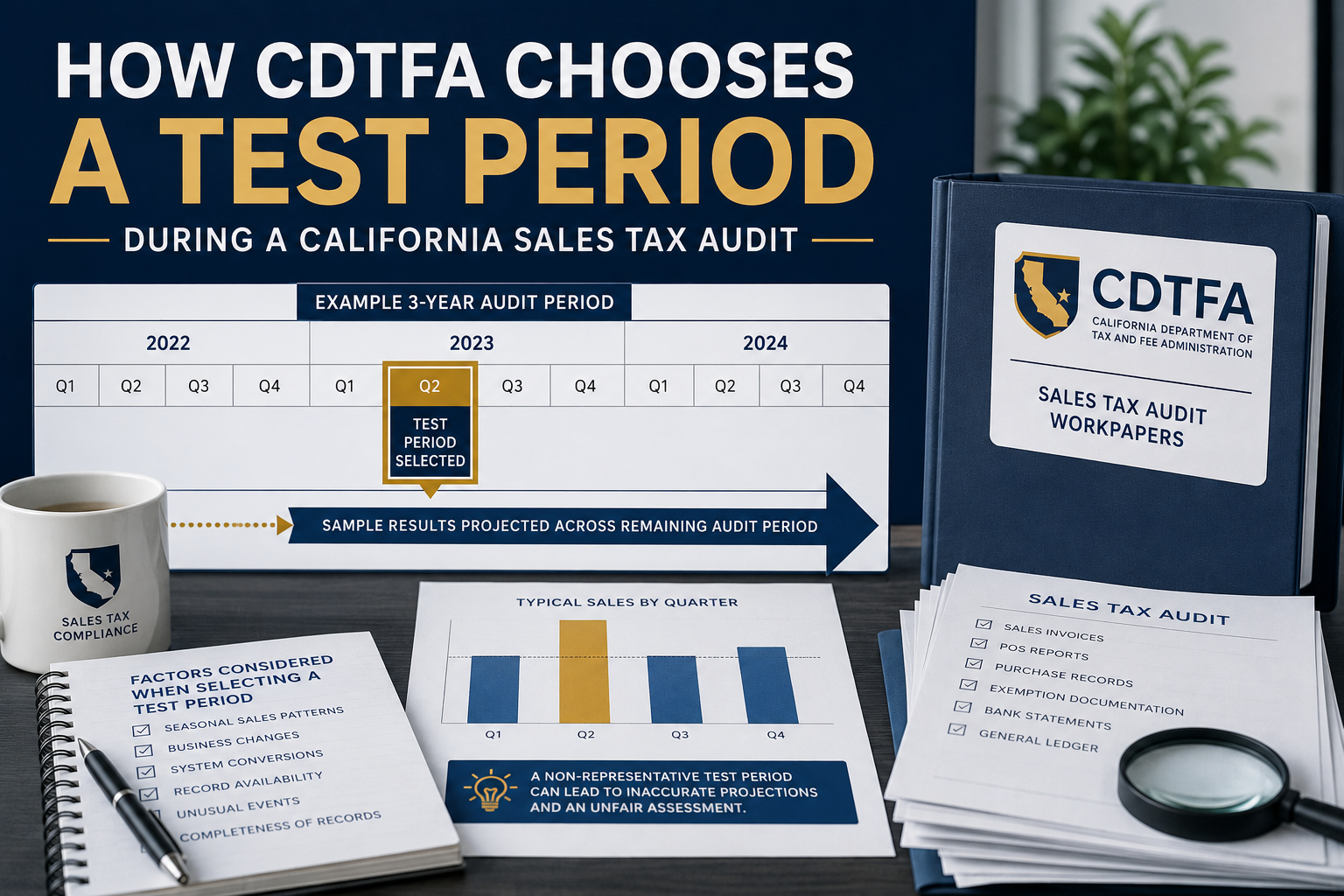
The California Department of Tax and Fee Administration (CDTFA) actively audits businesses for unreported use tax. Failing to pay use tax can lead to major penalties — even if you never made a sale. In fact, many cases start with a review of how sales tax works, including how California sales tax rates are determined, because mistakes in sales tax often overlap with unpaid use tax.
This guide explains what use tax is, when it applies, and how to stay compliant with CDTFA rules — especially if you buy goods from out of state. Knowing this can also help you prepare for the CDTFA sales tax audit process, which often includes checking whether businesses have properly reported use tax.
WHAT IS USE TAX?
Use tax is a complement to sales tax — not a replacement. It applies when you buy or receive taxable goods without paying California sales tax.
In other words, if you didn’t pay sales tax at the time of purchase, the state expects you to self-report and pay use tax.
It’s the same rate as the local sales tax — including district taxes in Orange County. Business owners often ask how California sales tax rates are determined, and the answer is that local district taxes are layered on top of the statewide base rate.
USE TAX VS. SALES TAX
| Feature | Sales Tax | Use Tax |
|---|---|---|
| Who collects it | The seller | The buyer (you) |
| When it applies | At time of sale in California | When buying from out-of-state sellers |
| Collected on invoice | Yes | No — must be self-reported |
| Enforced by | CDTFA | CDTFA |
COMMON USE TAX EXAMPLES
You may owe California use tax if you:
- Buy equipment online from an out-of-state vendor that doesn’t charge CA sales tax
- Order furniture or computers from a wholesaler that ships to your office in Orange County
- Import supplies from another state and use them in your business
- Purchase goods at trade shows and use them in California without resale
- Bring inventory into California from out-of-state warehouses for retail sale
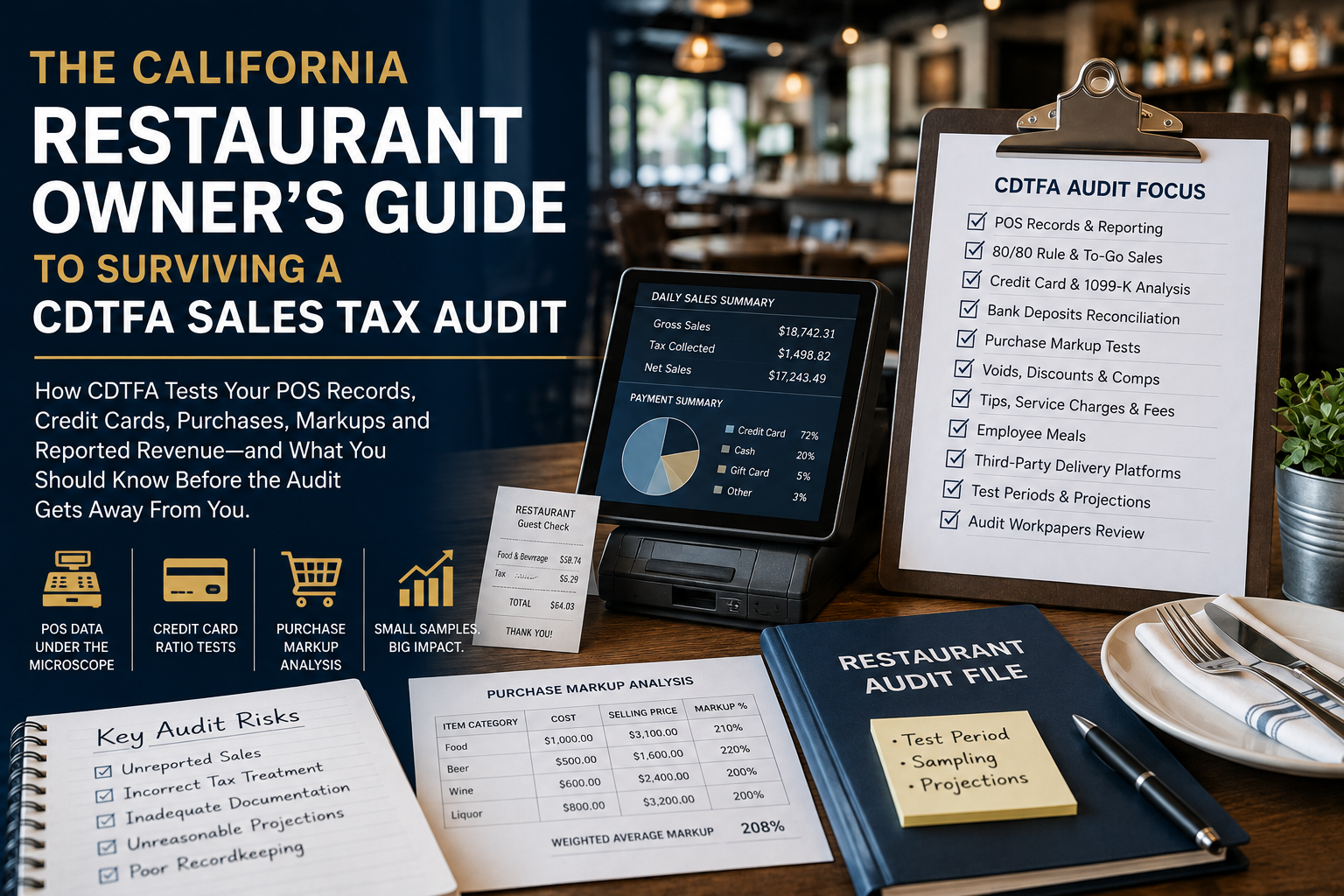
Restaurants, for example, often miss this when buying equipment, which is why guides like restaurant sales tax audit survival guide are so important.
DO I STILL OWE USE TAX IF THE SELLER DIDN’T CHARGE SALES TAX?
Yes. California law requires you to report and pay use tax directly to the CDTFA when:
- The item is taxable if purchased in-state
- You didn’t pay sales tax at time of purchase
- You store, use, or consume the item in California
Use tax liability does not go away just because the seller skipped charging tax.
HOW IS USE TAX ENFORCED?
The CDTFA checks for unreported use tax during:
- Routine sales tax audits
- Cross-matching against 1099s, shipping records, and vendor invoices
- Partnership audits where expenses are shared
- Business license reviews or permit applications
During reviews, they often look for CDTFA audit red flags for online sellers, since ecommerce businesses frequently underreport taxable purchases.
- If caught, you may owe:
- Back use tax (based on purchase price)
- Interest (accrued monthly)
Penalties (typically 10%–25%)
HOW TO REPORT USE TAX IN CALIFORNIA
You can report use tax:
On your California sales tax return (Schedule A on Form CDTFA-401)
- Or by filing Form CDTFA-530 for one-time purchases
- Most businesses include it as part of their regular filings.
You can’t just ignore it — the CDTFA has the authority to assess use tax going back three to eight years, especially if you’re under audit.
USE TAX OBLIGATIONS BY BUSINESS TYPE
| Business Type | Use Tax Trigger Example |
|---|---|
| Restaurant | Kitchen equipment bought online from Oregon |
| Construction Firm | Tools or tile purchased in Nevada and used in CA |
| Retailer | Fixtures or shelving bought from out-of-state vendor |
| Professional Office | Computers or printers ordered online from Florida |
WHAT RECORDS SHOULD YOU KEEP?
If you buy items without tax, keep:
- Invoices
- Shipping confirmations
- Proof of use (if not resold)
- Vendor tax status
- Records of payment and freight
A CDTFA auditor will use these to determine whether you owe tax.
HOW WE HELP
At Boulanger CPA, we represent California businesses before the CDTFA — including in use tax audits. We help you:
- Review vendor purchases for liability
- Calculate and file missing use tax
- Resolve CDTFA audits
- Avoid penalties and overpayments
- Fix past issues before they escalate
📍 Local to Orange County, we work with retailers, service providers, and ecommerce sellers across California.
Frequently Asked Questions
What is California sales tax?
California sales tax is a tax imposed on the sale of tangible personal property, collected by retailers and remitted to the California Department of Tax and Fee Administration (CDTFA).
What is the current California sales tax rate?
The statewide base rate is 7.25%, but local jurisdictions add district taxes, so actual rates vary by city and county.
What items are taxable in California?
Most physical goods are taxable. Common exemptions include groceries, prescription medicine, and some medical devices.
Do online sellers have to collect California sales tax?
Yes. Online sellers meeting California’s economic nexus threshold must register with the CDTFA and collect sales tax on California sales.
Who is responsible for paying sales tax?
Retailers collect sales tax from customers and remit it to the CDTFA. Consumers are responsible for paying use tax when sellers don’t collect it.
How often are sales tax returns filed?
Filing frequency depends on sales volume. Most businesses file quarterly, though some must file monthly or annually.
What happens if I don’t collect or remit sales tax?
The CDTFA can assess back taxes, penalties, and interest, and may pursue levies, liens, or audits for noncompliance.
Should I hire a CPA for sales tax compliance?
Yes. Professional guidance ensures you’re charging the correct rates, filing returns accurately, and staying compliant with CDTFA rules.

Marc Boulanger, CPA — California Sales Tax & CDTFA Audit Specialist
Marc is a CPA with many years of experience helping California business owners resolve complex sales tax and CDTFA audit matters. With formal training in accounting and a Master’s degree in Accounting, Marc combines technical precision with practical experience across industries such as restaurants, auto repair, retail, and multi-location franchises.
Outside of work, Marc enjoys traveling the country with his wife of 30 years and their five children. His approach to audit defense is built on clear communication, thorough analysis, and treating every client’s business as if it were his own.
Recent Posts