
Industries Most Targeted by CDTFA Sales Tax Audits in California
The California Department of Tax and Fee Administration (CDTFA) doesn’t audit businesses randomly. Certain industries are repeatedly flagged for sales tax audits, and if you operate in one of them, it’s not a question of if you’ll be audited — but when.
The CDTFA tends to focus on businesses with high cash volume, complex inventory movement, or a history of compliance problems. These are the types of CDTFA audit red flags for online sellers and traditional businesses alike.
At Boulanger CPA and Consulting PC, we’ve represented business owners across California in nearly every high-risk category. In this guide, we’ll break down the industries most often targeted by CDTFA audits — and what you can do to protect your business before the state comes calling.
WHY CDTFA TARGETS CERTAIN INDUSTRIES
Sales tax enforcement is all about risk and recoverability. The CDTFA audits industries that
- Frequently underreport sales
- Accept large volumes of cash
- Claim high rates of exempt sales
- Struggle with POS or inventory recordkeeping
- Have historically produced high audit yield
These industries are tracked closely using benchmarking, sampling techniques, and internal compliance scores.
TOP INDUSTRIES MOST TARGETED BY CDTFA
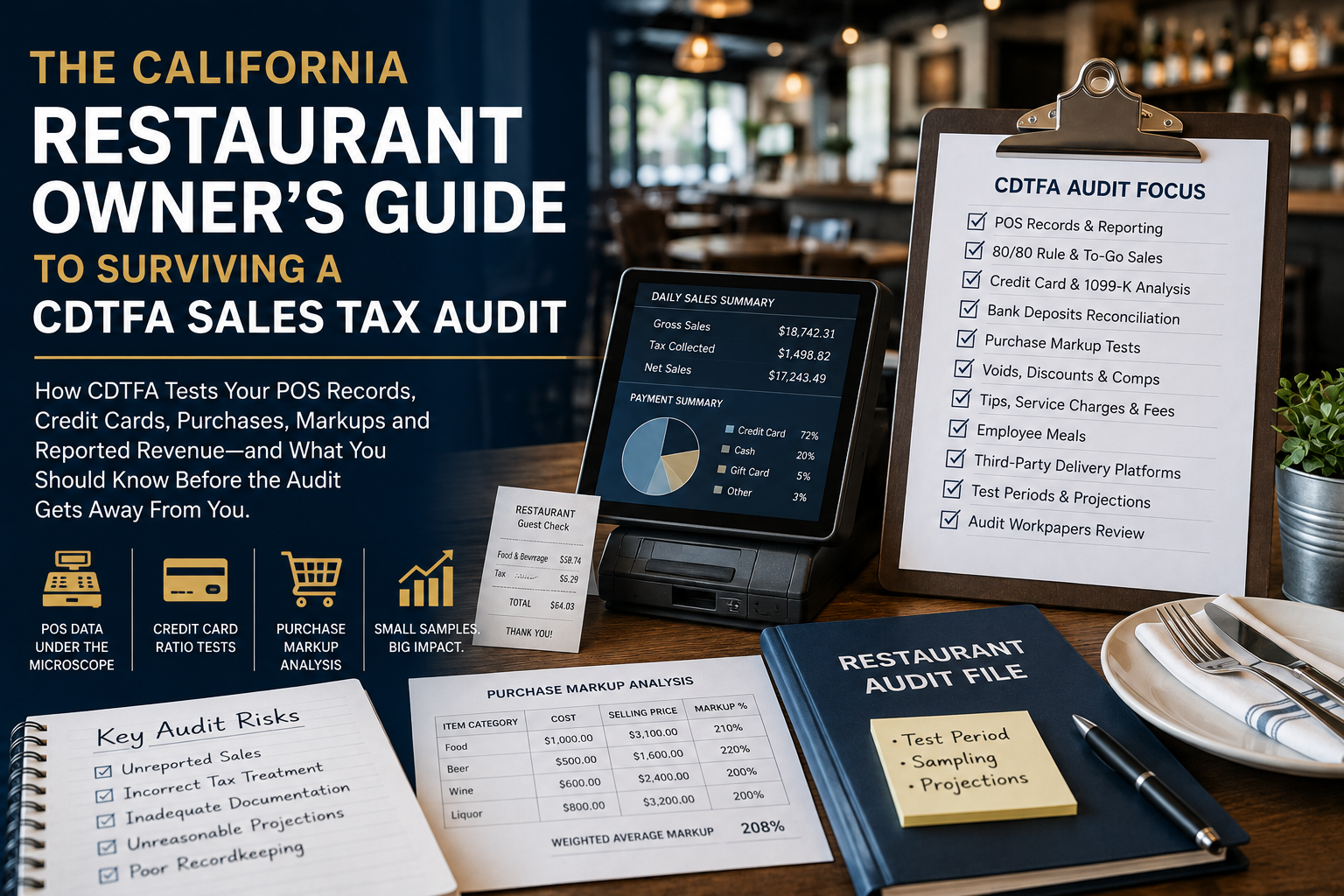
1. Restaurants and Bars
Why they’re targeted:
- High cash volume
- Frequent underreporting of alcohol or tip income
- Inconsistent POS reports vs. tax filings
- Common use of modifiers, voids, and unrecorded comps
- Susceptibility to sales suppression software
Risk level: Very High
Many owners search for a restaurant sales tax audit survival guide once they realize how aggressive these audits can be.
2. Construction Contractors
Why they’re targeted:
- Misclassification of materials vs. labor
- Taxability of materials supplied vs. purchased
- Poor recordkeeping on taxable vs. exempt sales
- Often miss use tax obligations
Risk level: Very High
3. Retail Stores (Clothing, Electronics, Convenience Stores)
Why they’re targeted:
- Inventory turnover doesn’t match reported sales
- Frequent POS errors or “ghost inventory”
- Exempt sale abuse (e.g., resale certificates not properly verified)
- Cash skimming or inconsistent deposit history
Risk level: Very High
4. Salons, Barbershops, and Nail Spas
Why they’re targeted:
- Cash-based services with minimal documentation
- Sales of taxable retail products (lotions, tools, accessories) often underreported
- High rates of unlicensed employees and contractor confusion
Risk level: High
5. Auto Repair and Parts Shops
Why they’re targeted:
- Labor vs. parts confusion (labor is exempt, parts are taxable)
- Invoice manipulation
- Unreported or misclassified used parts sales
- Core charges and disposal fees improperly handled
Risk level: High
6. Cannabis Dispensaries and Retailers
Why they’re targeted:
- Complex overlapping tax jurisdictions (sales tax, excise tax, local tax)
- Cash-only operations (due to federal banking restrictions)
- Limited POS transparency
- High-volume daily transactions with inconsistent recording
Risk level: Very High
7. E-Commerce and Online Sellers
Why they’re targeted:
- Nexus rules not understood or followed (especially after Wayfair v. South Dakota)
- Misreporting of out-of-state sales
- Improper or no collection of California use tax
- Platform sellers (Amazon, Shopify) failing to report correctly
Risk level: High
For these businesses, understanding CDTFA sales suppression audits explained is crucial to staying compliant.
8. Gas Stations and Convenience Stores
Why they’re targeted:
- Fuel excise tax vs. sales tax complexity
- Lottery, tobacco, and alcohol underreporting
- Skimming or underreported non-fuel retail sales
Risk level: Very High
HOW CDTFA IDENTIFIES AUDIT TARGETS
CDTFA uses:
- Industry-specific audit manuals
- Comparison to benchmark ratios (markup %, taxable % of sales)
- Statistical modeling to flag anomalies
- Prior audit history or flagged return patterns
- Third-party data (merchant accounts, POS systems, IRS, or FTB matching)
WHAT TO DO IF YOU'RE IN A HIGH-RISK INDUSTRY
If you're in one of the industries above, be proactive:
- Use auditor-friendly POS systems with tamper-proof data logs
- Maintain complete Z-tape or sales summary records
- Properly document resale certificate transactions
- Reconcile sales to bank deposits monthly
- Avoid handwritten receipts or estimates — digitize everything
- Schedule periodic compliance reviews with a CPA
HOW WE DEFEND TARGETED BUSINESSES DURING CDTFA AUDITS
At Boulanger CPA and Consulting PC, our defense process includes:
- Pre-audit risk analysis
- Forensic accounting and POS reconciliation
- Strategic documentation defense
- Challenging CDTFA audit findings when sampling methods are unfair
- Negotiating a CDTFA audit balance to reduce penalties and interest
- Representing clients through CDTFA appeals and settlements
This is the core of our sales tax audit defense in California—helping businesses survive and move forward.
BASED IN ORANGE COUNTY, SERVING CALIFORNIA STATEWIDE
We work with:
- Restaurants in Orange, Costa Mesa, Santa Ana
- Retailers in Anaheim and Riverside
- Contractors in San Diego and Los Angeles
- Online sellers statewide
For more details and strategies, you can always explore more in Defend What’s Yours—our resource hub for California business owners under CDTFA scrutiny.
Frequently Asked Questions
Which industries are most targeted by CDTFA audits?
Restaurants, convenience stores, vape shops, salons, auto repair shops, and contractors are among the most frequently audited industries in California.
Why are these industries targeted more often?
Cash-heavy businesses and industries with high sales tax compliance risk are prioritized by CDTFA auditors due to frequent underreporting issues.
What methods does CDTFA use during industry audits?
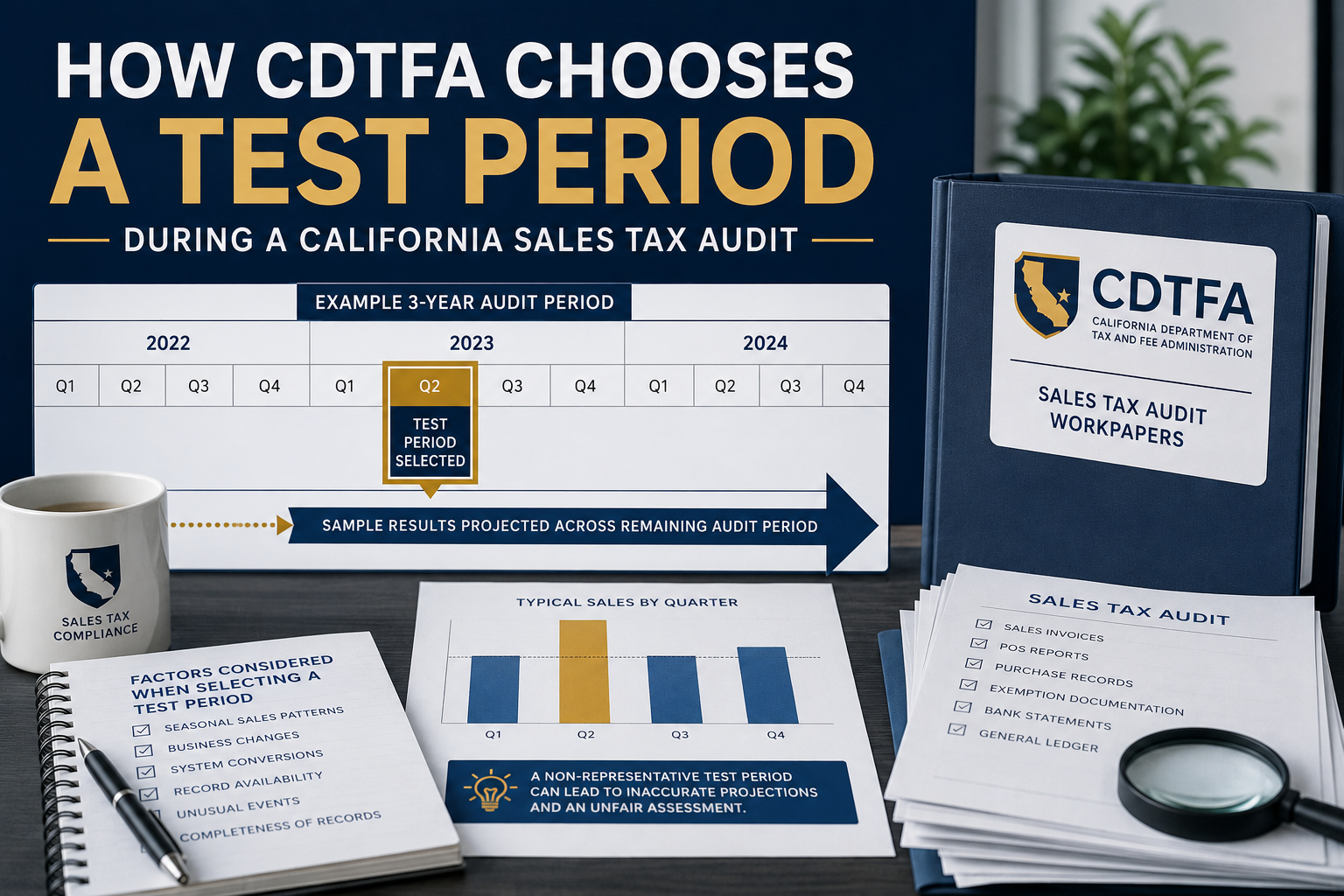
Auditors use markup tests, credit card-to-cash ratios, industry benchmarks, and third-party data to estimate unreported sales.
How far back can CDTFA audits go?
Most audits cover three years, but if fraud or significant underreporting is suspected, the CDTFA can extend audits further back.
Can CDTFA audits lead to IRS or FTB audits?
Yes. Findings from CDTFA audits are often shared with the IRS and California Franchise Tax Board, leading to additional examinations.
How can businesses in targeted industries prepare?
Maintain detailed sales records, POS data, bank statements, and invoices. Professional audit defense helps minimize liability.
Should I hire a CPA if my industry is targeted?
Yes. Proactive CPA support ensures compliance and provides strong defense if your business is audited.

Marc Boulanger, CPA — California Sales Tax & CDTFA Audit Specialist
Marc is a CPA with many years of experience helping California business owners resolve complex sales tax and CDTFA audit matters. With formal training in accounting and a Master’s degree in Accounting, Marc combines technical precision with practical experience across industries such as restaurants, auto repair, retail, and multi-location franchises.
Outside of work, Marc enjoys traveling the country with his wife of 30 years and their five children. His approach to audit defense is built on clear communication, thorough analysis, and treating every client’s business as if it were his own.
Recent Posts