
Can You Settle CDTFA Sales Tax Debt in California?

If you’ve been hit with a large sales tax bill from the California Department of Tax and Fee Administration (CDTFA), you’re probably wondering: Can I settle this for less than I owe?
The answer: sometimes. But settling CDTFA debt is not like settling with the IRS. California’s sales tax collection system has stricter rules, fewer settlement pathways, and far less flexibility.
At Boulanger CPA and Consulting PC, we help business owners across California navigate CDTFA audits, collections, and tax debt resolution. In this guide, we’ll walk you through:
- When CDTFA will consider settling tax debt
- What settlement options actually exist
- What they look for when evaluating your case
- How to avoid levies and liens while you negotiate
THE REALITY: CDTFA SETTLEMENTS ARE RARE — BUT NOT IMPOSSIBLE
Unlike the IRS, which has a formal Offer in Compromise (OIC) program, the CDTFA does not offer a public-facing debt settlement system for most taxpayers.
However, the CDTFA may reduce or resolve sales tax debt under certain circumstances, such as:
- Cases involving extreme financial hardship
- Businesses that have permanently closed
- Taxpayers who demonstrate inability to pay
- Penalty and interest settlements through administrative hearings
- Resolution as part of aPetition for Redetermination, protest, or appeal
- Assigned accounts where tax is deemed legally uncollectible
In other words: CDTFA settlement options are case-specific, not automatic.
WHAT CDTFA WON’T DO
- They won’t approve “pennies on the dollar” offers like you might see in IRS ads
- They don’t have a one-size-fits-all hardship form
- They rarely accept settlements unless all returns are filed and up to date
- They won’t negotiate while you’re actively avoiding them or under enforcement
WHO QUALIFIES FOR A CDTFA TAX SETTLEMENT?
You may be eligible if:
- You owe back sales tax due to audit findings
- Your business has shut down or lost major revenue
- You have no realistic ability to pay the full balance
- You’ve exhausted appeal rights and face aggressive enforcement
- You’re represented by a CPA or attorney who can propose a strategic solution
The CDTFA requires financial disclosures, typically including:
- Bank statements
- Income and expense reports
- Personal and business assets
- Tax return copies
- Property and vehicle information
For many businesses, the biggest challenge comes from sales tax audit defense in California, where detailed records and expert representation can mean the difference between paying a fair amount or being hit with inflated estimates.
WHEN THE CDTFA IS MOST LIKELY TO NEGOTIATE
After a final determination and the taxpayer has no appeal rights
During enforcement where levies have failed to collect
If the business has no assets and the owner can prove hardship
As part of a managed payment plan proposal (to avoid escalation)
Through a hearing officer during an administrative appeal or settlement conference
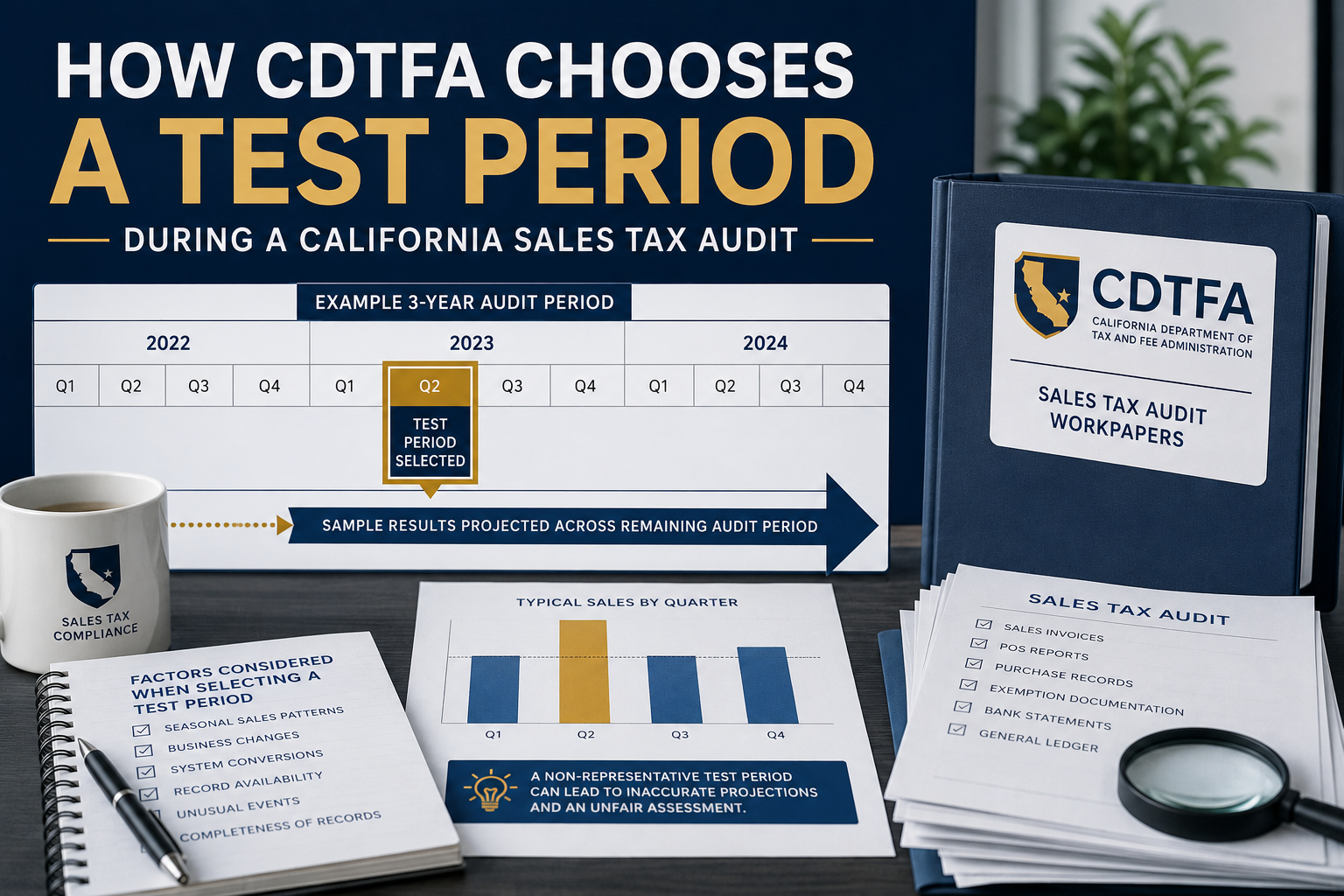
Our firm has also had success challenging CDTFA audit findings by carefully reviewing the agency’s sampling methods, reconstructing records, and identifying errors.
REAL CASE EXAMPLE – SETTLED $147K CDTFA BILL FOR $19K
A small business owner in Orange County received a sales tax audit assessment of $147,000 after recordkeeping issues led to inflated estimates. We filed a petition for redetermination, challenged the audit sample method, and demonstrated the business had closed. The case settled for $19,000, saving the client over $125,000.
Many entrepreneurs—especially ecommerce operators—face CDTFA audit red flags for online sellers such as poor documentation of marketplace transactions, cash receipts, or misapplied exemptions.
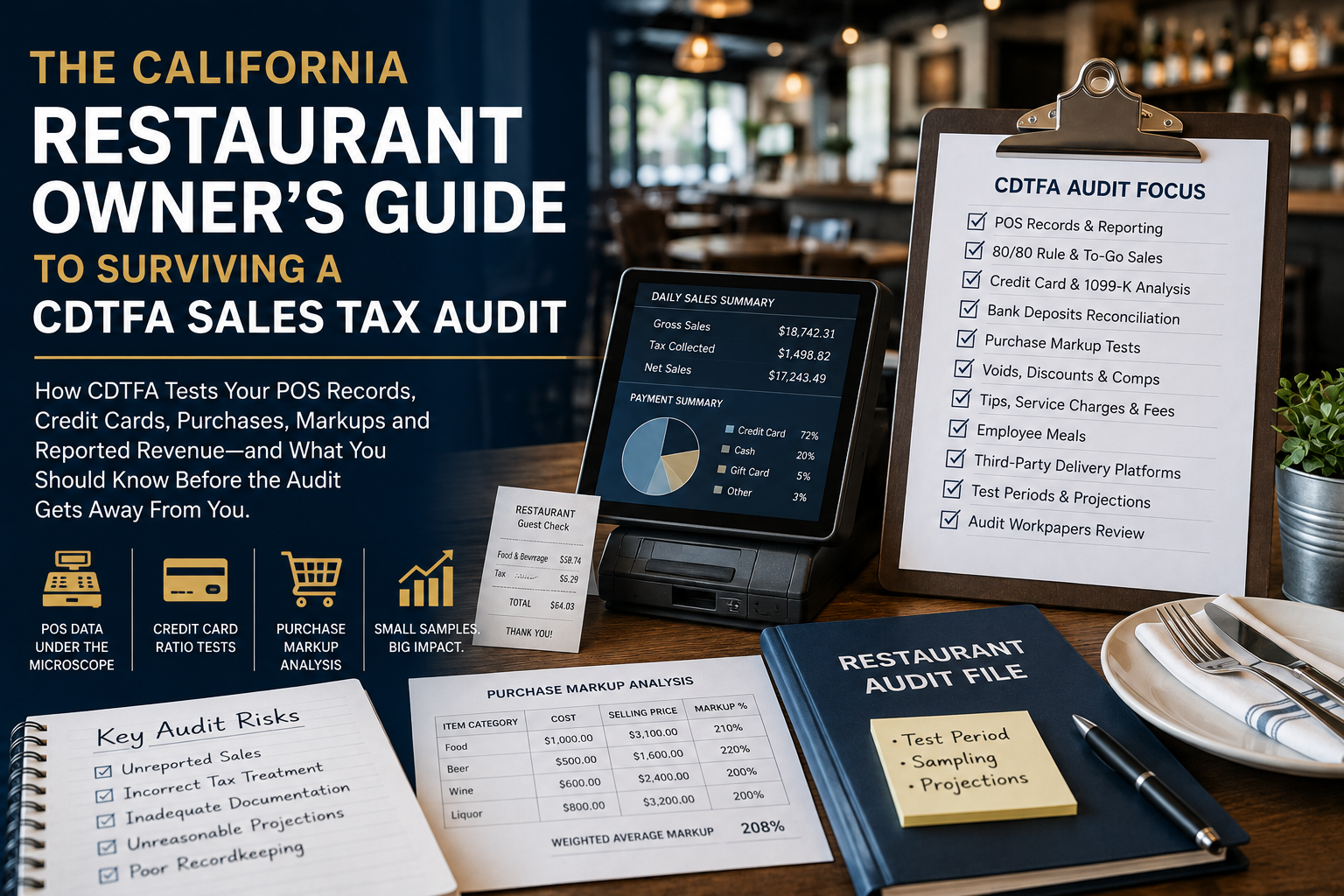
Restaurants, in particular, often benefit from resources like our restaurant sales tax audit survival guide, which helps owners understand common CDTFA issues with tips, meals, and cash transactions.
WHAT IF YOU CAN’T PAY RIGHT NOW?
- After a final determination and the taxpayer has no appeal rights
- During enforcement where levies have failed to collect
- If the business has no assets and the owner can prove hardship
- As part of a managed payment plan proposal (to avoid escalation)
- Through a hearing officer during an administrative appeal or settlement conference
CDTFA has also increased enforcement through CDTFA sales suppression audits explained, which target businesses suspected of underreporting cash transactions or using illegal software to hide sales.
And if your case gets referred to the Franchise Tax Board, knowing about the FTB Offer in Compromise program could provide another pathway for resolving debts when full payment is impossible.
If you can’t settle your debt, you may still qualify for:
Installment Agreement
A long-term payment plan based on financial condition. CDTFA generally requires 20–50% of disposable income applied to the debt monthly.
Enforcement Hold
In hardship situations, collections may be paused temporarily while we submit a proposal or file for relief.
Redetermination or Reconsideration Petition
You may be able to reopen the audit if errors were made or new evidence is available.
WHAT HAPPENS IF YOU IGNORE IT?
- Bank levies (business and personal)
- Wage garnishments
- Liens against property and business licenses
- Asset seizures
- Referral to the FTB or Attorney General in severe cases
Once CDTFA enforcement starts, your options shrink fast.
WE HELP BUSINESS OWNERS SETTLE CDTFA DEBTS ACROSS CALIFORNIA
We work with clients in:
- Orange
- Santa Ana
- Costa Mesa
- Riverside
- Anaheim
- San Diego
…and across the state
Whether you just received your audit findings or have an old CDTFA balance piling up, we can help.
If you’re ready to take action, let us explore more in Defend What’s Yours—our proven approach to protecting businesses and individuals from aggressive state tax enforcement.
WANT TO KNOW IF YOU CAN SETTLE YOUR CDTFA TAX DEBT?
Let us review your case, analyze your financials, and give you real answers—not sales pitches.
Frequently Asked Questions
Can CDTFA sales tax debt be settled for less?
Yes. The CDTFA offers an Offer in Compromise program that may allow you to settle sales tax debt for less than the full balance if you qualify.
Who qualifies for a CDTFA Offer in Compromise?
Eligibility depends on your income, expenses, assets, and overall ability to pay. The CDTFA only accepts offers when full collection is unlikely.
What if I don’t qualify for an OIC?
You may still negotiate installment agreements, request penalty abatement, or seek hardship status to prevent aggressive collection actions.
Does CDTFA settlement erase all penalties?
No. While some penalties may be reduced, interest typically continues until the balance is fully paid.
How long does the settlement process take?
The CDTFA review process may take several months. During this time, enforcement actions may be paused if you are actively negotiating.
Can CDTFA settlement affect federal tax issues?
Yes. CDTFA shares settlement data with the IRS and Franchise Tax Board, and federal issues may arise if discrepancies are found.
Should I hire a CPA for CDTFA settlement negotiations?
Yes. Professional representation ensures your financial disclosures are accurate and maximizes your chances of approval.

Marc Boulanger, CPA — California Sales Tax & CDTFA Audit Specialist
Marc is a CPA with many years of experience helping California business owners resolve complex sales tax and CDTFA audit matters. With formal training in accounting and a Master’s degree in Accounting, Marc combines technical precision with practical experience across industries such as restaurants, auto repair, retail, and multi-location franchises.
Outside of work, Marc enjoys traveling the country with his wife of 30 years and their five children. His approach to audit defense is built on clear communication, thorough analysis, and treating every client’s business as if it were his own.
Recent Posts