
California Sales Tax Audits Step by Step: What to Expect from the CDTFA

If you're a California business owner and you’ve received a letter from the California Department of Tax and Fee Administration (CDTFA), don’t panic — but don’t ignore it either. A CDTFA sales tax audit can disrupt your operations, strain your finances, and put you at risk for penalties or even business closure if mishandled. Knowing what happens if you fail a CDTFA sales tax audit can help you prepare, protect your rights, and minimize exposure.
In this guide, we'll walk through the step-by-step CDTFA audit process, explain what happens at each stage, and show you how a qualified CPA can help you reduce exposure and defend your business.
STEP 1: AUDIT NOTIFICATION LETTER
Most sales tax audits begin with a written letter from the CDTFA stating that your business has been selected for audit. This will include:
- The period being audited (usually 3 years)
- The auditor's contact information
- A request to schedule an initial appointment
- A general list of records you’ll be expected to provide
This is your opportunity to get representation in place before speaking to the auditor.
STEP 2: OPENING CONFERENCE
At the opening conference, the auditor will explain the scope and nature of the audit. They’ll typically ask questions such as:
- What type of business do you run?
- How do you track sales?
- Do you make exempt sales?
- What point-of-sale (POS) system do you use?
- Do you sell online or out-of-state?
Your answers can shape the direction and depth of the audit — and if you’re unprepared or inconsistent, the audit may expand.
STEP 3: INITIAL RECORDS REVIEW
The CDTFA will request a wide range of records, including:
- Sales journals or POS system reports
- Purchase invoices
- Federal and California income tax returns
- General ledger or QuickBooks data
- Bank and credit card statements
- Sales tax returns (Form BOE-401)
- Resale certificates for exempt transactions
Missing or disorganized records are one of the top reasons audits go badly. If your records don’t match your reported numbers, the CDTFA may estimate your sales using industry markup formulas.
STEP 4: AUDIT TESTING & ESTIMATION METHODS
Auditors will use one or more testing methods to validate your reported sales:
- Observation tests (in-person review of operations)
- Mark-up analysis (cost of goods sold vs. reported revenue)
- Bank deposit analysis (to uncover underreported cash income)
- Purchase ratio analysis (compare taxable vs. non-taxable sales)
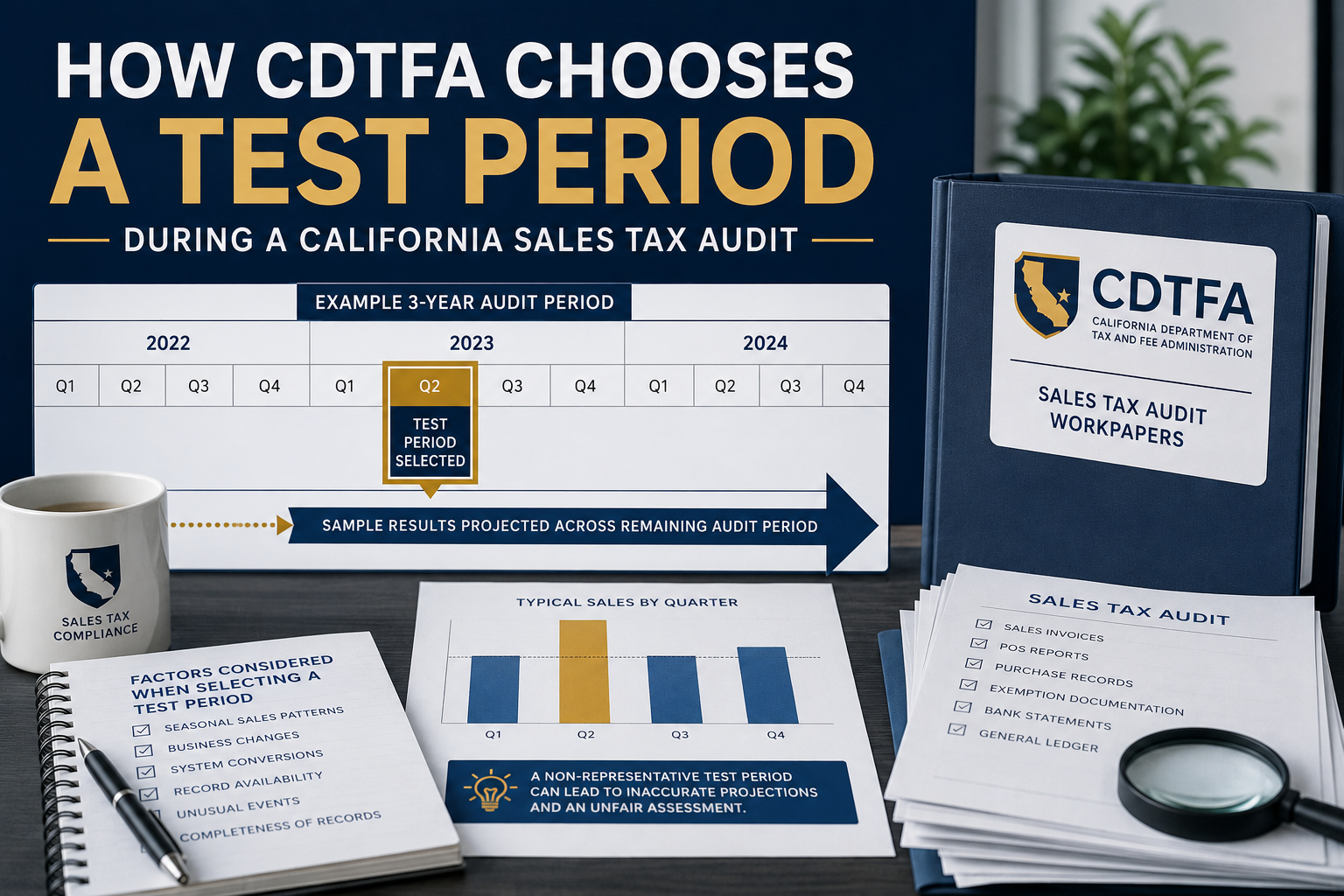
- Statistical sampling (when the audit period is too large)
If any method shows discrepancies, the auditor may apply that percentage to the entire audit period — often leading to tens of thousands in additional tax assessments.
STEP 5: PRELIMINARY FINDINGS
Once testing is complete, the auditor will issue preliminary audit findings. This may include:
- Total unreported taxable sales
- Rejected documentation
- Estimated taxes owed
- Proposed penalties
- Accrued interest
You’ll have a brief window for challenging CDTFA audit findings by submitting clarifying documentation or pointing out errors before the audit is finalized.
STEP 6: NOTICE OF DETERMINATION
If you don’t dispute the preliminary findings, the CDTFA will issue a Notice of Determination (NOD) — the formal billing notice.
This becomes your official tax bill and starts the 30-day deadline for appeal.
The NOD includes:
- Total tax owed
- Penalties (10%–25% typically)
- Interest
- Final date to file a petition
At this stage, responding to a CDTFA Notice of Determination quickly and strategically is critical.
STEP 7: PETITION FOR REDETERMINATION (OPTIONAL BUT CRITICAL)
If you disagree with the NOD, you can file a Petition for Redetermination. This must be done within 30 days or the liability becomes final and enforceable.
The petition can lead to:
- A revised audit
- A settlement negotiation
- An informal hearing
- Referral to the Office of Tax Appeals (OTA)
This is also the point where negotiating a CDTFA audit balance can make the difference between business survival and closure. For penalties included in the balance, a CDTFA penalty abatement guide can help reduce or remove unfair charges.
STEP 8: RESOLUTION OR ENFORCEMENT
Once the NOD becomes final, the CDTFA can move to collection — this includes:
- Wage garnishments
- Bank account levies
- Liens on business or personal assets
- Permit suspension or revocation
- Referral for legal action
At this stage, your options are limited to:
- Payment plans
- Offer in Compromise (for closed businesses only)
- Hardship deferral (rare and temporary)
YOUR CDTFA AUDIT DEFENSE STRATEGY
If you're being audited, the best time to take action is before the audit starts or at the preliminary findings stage.
At Boulanger CPA, we specialize in sales tax audit defense in California to help protect business owners against unfair audit results. We:
- Respond to the CDTFA on your behalf
- Limit the audit scope
- Review and organize records
- Push back on flawed audit methods
- File timely appeals or petitions
- Negotiate reductions or settlements
- Help you recover after enforcement begins
Frequently Asked Questions
How does a CDTFA sales tax audit begin?
The audit begins when the CDTFA sends a notice requesting records. They may target specific tax periods or select audit samples for review.
What records will the CDTFA request?
Auditors usually request sales journals, bank statements, purchase invoices, POS reports, and resale certificates to verify sales tax reporting accuracy.
What methods do CDTFA auditors use?
Common methods include markup analysis, bank deposit comparisons, and credit card-to-cash ratio tests to estimate unreported sales.
How far back can the CDTFA audit?
Most audits cover three years, but the CDTFA may go back further if fraud or significant underreporting is suspected.
What happens after the audit is complete?
You’ll receive a Notice of Determination outlining assessed tax, penalties, and interest. You can pay, appeal, or negotiate settlement options.
Can I appeal CDTFA audit findings?
Yes. You can file a Petition for Redetermination within 30 days of the Notice of Determination and appeal further to the Office of Tax Appeals if needed.
Should I hire a CPA for a CDTFA audit?
Yes. Professional representation ensures accurate defense, minimizes adjustments, and protects you from excessive penalties.

Marc Boulanger, CPA — California Sales Tax & CDTFA Audit Specialist
Marc is a CPA with many years of experience helping California business owners resolve complex sales tax and CDTFA audit matters. With formal training in accounting and a Master’s degree in Accounting, Marc combines technical precision with practical experience across industries such as restaurants, auto repair, retail, and multi-location franchises.
Outside of work, Marc enjoys traveling the country with his wife of 30 years and their five children. His approach to audit defense is built on clear communication, thorough analysis, and treating every client’s business as if it were his own.
Recent Posts